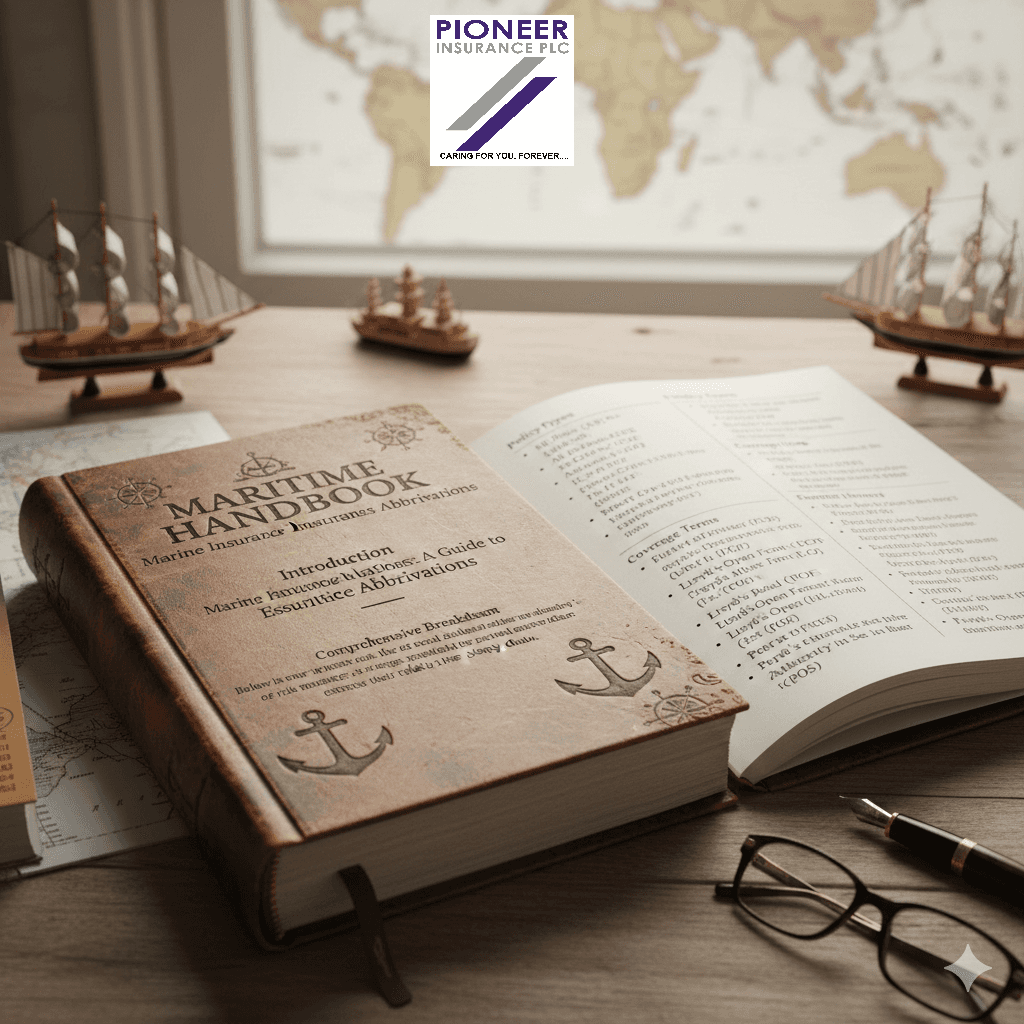
The Maritime HANDBOOK: Marine Insurance Abbreviations: A Guide to Essential Insurance Abbreviations by Kazi Siratul Haque
In the complex world of marine insurance, a single acronym can be the difference between a covered claim and a costly dispute. Whether you are an underwriter, a broker, or a risk manager, mastering this "alphabet soup" is essential for clear communication and precise policy drafting.
Below is our comprehensive breakdown of the industry’s most critical terms, categorized by their role in the global supply chain.
⚓ 1. General Maritime & Insurance Foundations
These terms define the legal and financial relationship between the insurer, the vessel owner, and the cargo interest.
Abbreviation | Full Term | Description |
P&I | Protection & Indemnity | Mutual insurance covering third-party liabilities (crew injury, pollution, etc.). |
H&M | Hull & Machinery | Insurance covering physical damage to the ship's structure and equipment. |
G/A | General Average | A legal principle where all parties share a loss resulting from a sacrifice to save the voyage. |
LOF | Lloyd's Open Form | The standard "No Cure – No Pay" contract used in emergency salvage operations. |
B/L | Bill of Lading | The primary document of title, serving as a contract of carriage and receipt of goods. |
CIF / FOB | Cost, Insurance, Freight / Free on Board | Incoterms that dictate exactly when the risk of loss transfers from seller to buyer. |
📦 2. Shipping & Cargo Handling
Precision in logistics is vital for loss prevention. Misunderstanding these terms often leads to "Out of Gauge" risks that require specialized riders.
· TEU (Twenty-foot Equivalent Unit): The universal measure of container capacity.
· FCL / LCL (Full / Less than Container Load): Determines whether a container is dedicated to one shipper or consolidated with others.
· VGM (Verified Gross Mass): A mandatory weight declaration under SOLAS to prevent vessel instability.
· RORO (Roll-On/Roll-Off): Vessels designed specifically for wheeled cargo (cars, trucks, trailers).
· STC (Said to Contain): A protective clause for carriers noting they have not verified the contents of a sealed container.
⚖️ 3. Regulatory & Safety Standards
From a claims perspective, compliance with these codes is often a "warranty" or condition of the insurance policy. Non-compliance can void coverage.
SOLAS (Safety of Life at Sea): The most important international treaty concerning the safety of merchant ships.
· ISM Code: The International Safety Management Code; the gold standard for operational safety.
· MARPOL: The primary convention for preventing marine pollution from operational or accidental causes.
· COLREGS: The "rules of the road" used to determine liability in collision claims.
· MLC (Maritime Labour Convention): Ensures the rights and protection of seafarers—a key factor in P&I crew claims.
· ISPS Code: The framework for ship and port security to mitigate terrorism and piracy risks.
🌿 4. Environmental & Technical Operations
As the industry pivots toward "Green Shipping," these technical abbreviations are appearing more frequently in environmental liability and machinery breakdown files.
· ECA / SECA (Emission Control Areas): Specific sea areas where stricter controls on sulfur and nitrogen oxide emissions are enforced.
· BWTS (Ballast Water Treatment System): Equipment required to prevent the spread of invasive species; a frequent source of "machinery breakdown" claims.
· FONAR (Fuel Oil Non-Availability Report): A formal filing used when compliant low-sulfur fuel cannot be sourced.
· AIS / ECDIS: The digital backbone of modern navigation—Automatic Identification Systems and Electronic Chart Displays.
🏛️ 5. Organizations & Administration
These bodies provide the frameworks and oversight that keep global trade moving.
· IMO (International Maritime Organization): The UN agency that sets the global standards for shipping safety and environment.
· BIMCO: The world’s largest shipping association, providing the standard contract templates used in the industry.
· PSC (Port State Control): National maritime authorities that inspect foreign ships to ensure they meet international standards.
· COFR (Certificate of Financial Responsibility): Required by the US Coast Guard to prove a vessel can pay for oil spill cleanups.
· HS Code: The "Harmonized System" used globally to classify traded products for customs and insurance valuation.
The Bottom Line
In marine insurance, clarity is your best defense against litigation. Utilizing the correct terminology ensures that all parties—from the surveyor on the dock to the underwriter in the office—are speaking the same language.